Home / Habits & Productivity / Habits
HabitsA habit is a small promise to your future self. Make it smaller.
The case for starting so small it feels slightly ridiculous, and why that is the point.
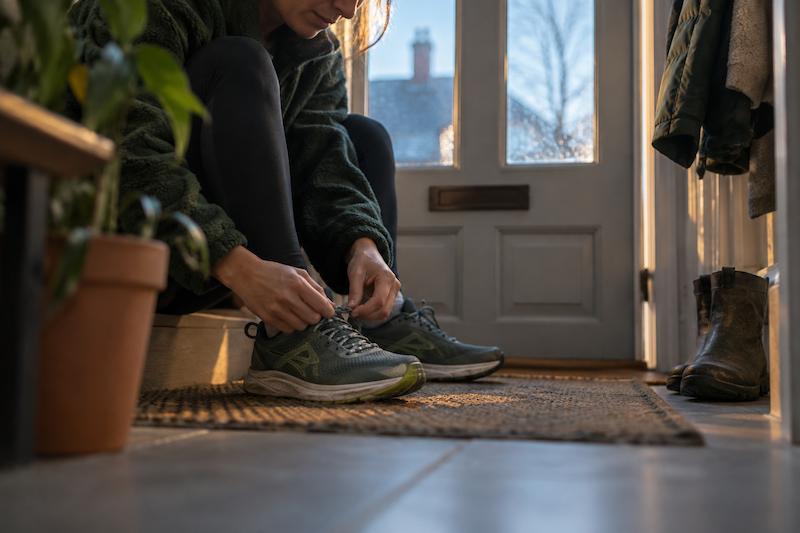
Most habits fail not because people lack willpower but because the first version is too big. Thirty minutes of exercise, an hour of study, a perfect morning routine: these are plans for a person with an empty diary and a good night's sleep. They do not survive a normal Tuesday.
The alternative is almost embarrassingly simple. Shrink the habit until it is easy to do on your worst day, then let it grow on its own schedule.
How long does a habit take?
You will often see the figure of 21 days. It is not well supported. A frequently cited study led by Phillippa Lally at University College London followed people forming a new daily behaviour and found that the time to reach automaticity varied enormously between individuals and between behaviours, with an average of around two months. The takeaway is not a number. It is that habits take longer than most guides promise, and that missing a day did not wreck the process.
The three parts of a small habit
- An anchor. Attach the habit to something you already do every day: pouring the first coffee, brushing your teeth, shutting the laptop.
- A tiny action. The version that takes under two minutes and can be done when you are tired. One press-up. One sentence. Putting your trainers by the door.
- A small reward. Ticking a box, taking a deliberate breath, a moment of noticing that you did what you said you would.
This follows the idea of implementation intentions, studied by the psychologist Peter Gollwitzer: stating in advance exactly when and where you will act ("After I do X, I will do Y") makes follow-through more likely than a general intention.
The point of the tiny version is not the tiny result. It is keeping the promise.
Plan for the bad days
Every habit has a bad-day version. Decide it in advance. If your usual habit is a 20-minute walk, the bad-day version is putting on your shoes and stepping outside for one minute. Adopt a simple rule: never miss twice. One missed day is an event. Two is the start of a pattern.
Let it grow, or do not
Once the tiny habit is steady, you can stretch it if you want to. The one-line journal becomes a paragraph; the one-minute walk becomes ten. But some habits are better left small. A very small habit that you do reliably for years beats an ambitious one that lasted a fortnight.
A note on health
If your habit involves exercise, changes to eating or sleep, and you have a health condition or are unsure whether it is suitable, speak to your GP or a qualified professional first.