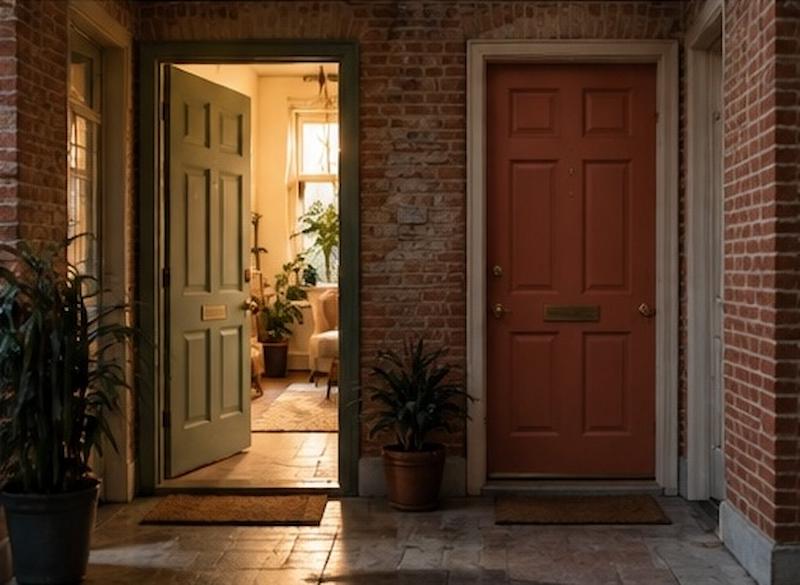
A lot of decision fatigue comes from treating every choice as though it were permanent. Which course to take, whether to switch phone provider, what to do with a free Saturday: they all end up in the same mental queue as the choices that really are hard to reverse.
A useful way out is to sort decisions before you make them. The distinction between decisions you can reverse and decisions you cannot was popularised by Jeff Bezos in his letters to Amazon shareholders, who described one-way and two-way doors. You do not need to run a company to borrow the idea.
Door one: easy to reverse
A two-way door is a decision you can walk back through. If it does not work out, you can undo it, at a modest cost.
Examples include trying a new routine, joining a class for a term, rearranging a room, or testing a different way of working for a month. For these decisions, speed and experiment beat deliberation. Information from trying is usually better than information from thinking.
Door two: hard to reverse
A one-way door is a decision that is costly, slow or impossible to undo. Signing a long contract, moving to another city, ending a close relationship, or taking on a large financial commitment tend to be one-way.
For these decisions it is worth slowing down. Give yourself time, talk to people who know the territory, and seek one voice that disagrees with you.
Three questions to sort a decision
- Can I undo this? If yes, how much would it cost in money, time and goodwill?
- How long will I live with it? A week's inconvenience is different from a three-year commitment.
- What would I need to know to feel reasonably settled? Name the missing information. If you cannot get it, further thinking will not help.
Most doors are two-way. The skill is noticing the few that are not.
A simple routine for two-way doors
- Write the decision in one sentence.
- Set a deadline, which should be shorter than you would like.
- Choose the option that teaches you the most.
- Pick a review date, and decide in advance what result would make you change course.
A word on big decisions
Decisions about money, housing, employment contracts, health or legal matters often sit behind one-way doors, and they can have consequences that are specific to you. Use this method to clarify your own thinking, not as a substitute for advice from a regulated professional such as an independent financial adviser, a solicitor or your GP.